
Many parents ask, “How much should kids practice an instrument each day?” especially when balancing school, activities, and family time. Is 20 minutes enough? Should it be an hour? From my experience, there isn’t one practice time that works for every child. Age matters, but so do a child’s skill level, goals, and how seriously they want to pursue music. A beginner learning for fun and a student preparing for competitions or orchestra auditions simply need different practice routines.
Table of Contents
How Much Should Kids Practice an Instrument Each Day?
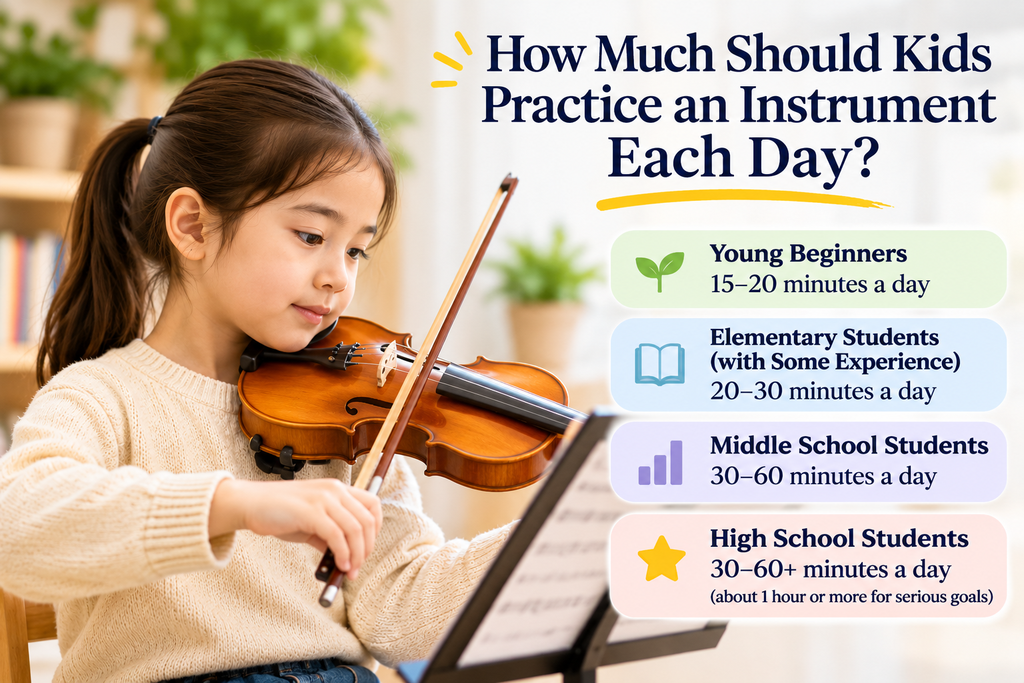
There isn’t one perfect practice time for every child, but these are the general ranges that have worked well from what I’ve seen with my own children:
Young beginners: 15–20 minutes a day can be enough to build a consistent habit without making practice feel overwhelming.
Elementary students with some experience: Around 20–30 minutes a day may work well, depending on their level and what their teacher assigns.
Middle school students: About 30–60 minutes may be more appropriate as the music becomes more challenging and their goals become clearer.
High school students: Practice time can vary widely depending on the student’s goals. A student playing mainly for enjoyment may practice around 30-60 minutes, while a more serious student may need an hour or more, especially when preparing for auditions, performances, or competitions.
Students preparing for auditions, competitions, or advanced orchestra: Practice may gradually increase to one or even two hours, especially as their level becomes more advanced.
These are not strict rules. A focused 30-minute practice can sometimes be more valuable than an unfocused hour. The right amount depends on the child’s age, level, goals, and ability to stay focused.
For Beginners, Consistency Matters More Than Time
For a young beginner, especially an elementary school student, I don’t think long practice sessions should be the first goal. Too much practice too soon can make a child lose interest in the instrument. At this stage, I believe it is more important to help children enjoy playing and build the habit of practicing regularly. Even a shorter practice session can be valuable when it is focused and consistent.
Set a Practice Time and Make It Part of the Routine
I still believe it is important to set a regular practice time. When children know when and how long they are expected to practice, they can plan the rest of their day around schoolwork and other activities. A set practice time can also help them stay focused because they know exactly what they need to do and how much time they have.
When Your Child Doesn’t Want to Practice
There will be days when a child simply doesn’t want to practice. Instead of immediately forcing them to play, I think it is important to listen and understand why. Maybe they are tired, overwhelmed with schoolwork, or simply having a difficult day. If the reason is reasonable, I may shorten the practice time. But I try not to make skipping practice the solution. Even on a difficult day, a shorter practice session helps keep the routine going.
Practice Time Should Match Your Child’s Level and Goals
As children improve, age alone becomes less useful for deciding how much they should practice. Two middle school students may need very different practice schedules. A student who plays for enjoyment may not need hours of daily practice, while an advanced student preparing for competitions, orchestra auditions, or performances may need one to two hours of focused practice on a regular basis. The right amount of practice depends on where your child is now and where they want to go.
I’ve seen this difference with my own children. As they became more experienced with their instruments, practice time naturally changed. When they were beginners, building the habit mattered most. As the music became harder and goals such as performances, competitions, and orchestra became more important, they needed longer and more focused practice. That’s why I no longer look at age alone when deciding how much practice is enough.
Quality Matters More Than Just Practice Time
As children get older and more serious about music, the amount of practice becomes important, but simply practicing longer does not always mean better results. Focused practice matters more. A child who practices with a clear goal for 40 minutes may accomplish more than a child who plays without focus for two hours. This becomes even more important when students are balancing school, other activities, competitions, and orchestra.
In our family, I’ve found that practice works better when there is a specific goal instead of simply trying to fill a certain number of minutes. That might mean working slowly on a difficult section, repeating a few measures that keep causing mistakes, practicing scales, or focusing on something the teacher mentioned during the last lesson. When the goal is clear, even a shorter practice session can feel much more productive.
Improvement Takes Time and Support
Reaching a certain level on an instrument takes real time and effort. From what I’ve seen with my own children, the first two or three years of learning an instrument can be especially important. When a child practices consistently during those years, you may begin to see a real change in both skill and confidence. Progress does not happen overnight. It builds little by little through regular practice, patience, and experience.
A good and experienced teacher can make a big difference, but parents also play an important role. Children need support to keep going through difficult periods, especially when progress feels slow. Lessons, practice time, encouragement, and opportunities to perform all work together over time.
Being Good at Something and loving It Are Not Always the Same
As children grow, they may discover that what they are good at is not always the same as what they enjoy most. I think this is something each child eventually needs to decide for themselves. If the goal is achievement, competitions, or reaching a higher level, it may make sense to focus more on what they do well. If the goal is simply to enjoy music, then choosing the instrument they truly love may be more important.
There is no single right choice. What matters is understanding what your child wants from music.
The Right Practice Time is Different for Every Child
There is no perfect number of minutes that works for every child. A beginner may need only a short, consistent practice session, while a more advanced student with serious goals may need much more time. What matters most is finding a routine that fits your child’s level, goals, and life.
As parents, we can provide structure, encouragement, good teachers, and opportunities. But as children grow, they also need to understand why they are practicing and what they want to achieve. In the end, consistency, focused practice, and a clear goal matter more than simply watching the clock.
The National Association for Music Education also recommends setting clear goals, practicing short sections, and reflecting on progress to make practice more effective.