
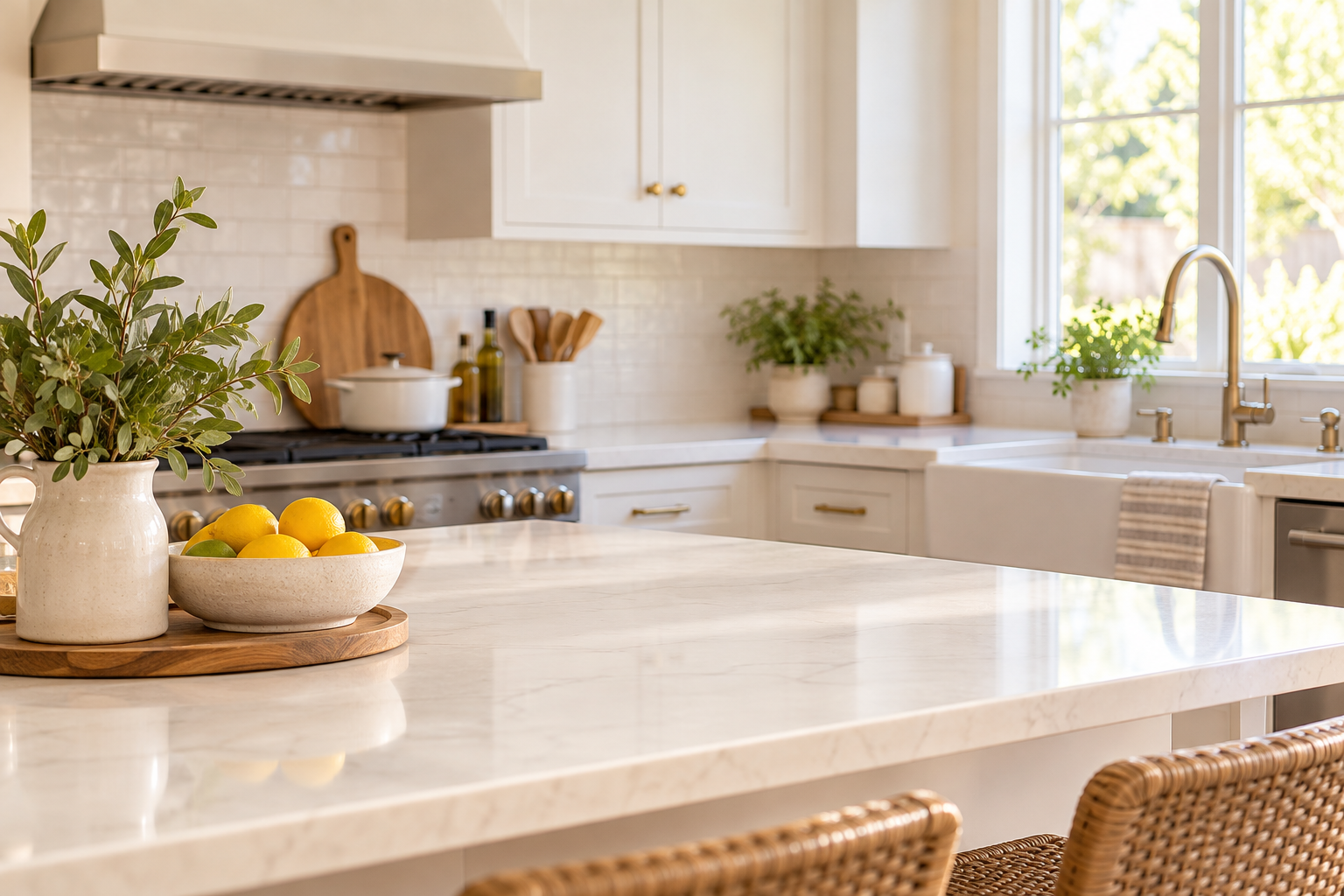
Learning how to keep kitchen counters clutter-free has make a surprisingly big difference in how our kitchen feels every day.
Mail gets dropped there. Receipts come out of grocery bags. Someone leaves a set of car keys, a water bottle, or a takeout coffee cup. A child brings something home from school and puts it down “just for now.”
And somehow, all of those little “just for now” moments turn into a cluttered kitchen counter.
I’ve realized that keeping my kitchen counters clear isn’t really about constantly cleaning them. It’s about understanding why things end up there in the first place and giving those things somewhere else to go.
Here are the simple habits that help me keep our kitchen counters clutter-free.
Table of Contents
1. How to Keep Kitchen Counters Clutter-Free by Understanding Why Clutter Builds Up
I think one of the biggest reasons kitchen counters collect so much stuff is surprisingly simple: they are convenient.
They’re flat, open, and usually right around waist height. When we’re carrying something, the counter is often the easiest place to put it down.
The kitchen is also often located near the center of the home. We pass through it when coming in from outside, moving between rooms, preparing meals, or helping the kids.
That makes the kitchen counter the perfect temporary landing place.
The problem is that “temporary” items have a way of staying there.
Mail, car keys, receipts, takeout cups, school papers, and random things without a designated home slowly start taking over the counter.
For me, this was an important realization:
Clutter often collects on the kitchen counter because an item doesn’t have an easier place to go.
Instead of constantly moving the same things around, I try to give them a specific home.
2. Keep Certain Things Off the Kitchen Counter
One of the easiest ways I’ve found to keep kitchen counters clutter-free is to decide what simply doesn’t belong there.
Mail, papers, and receipts
Paper clutter can multiply incredibly quickly.
Mail, grocery receipts, school papers, and forms may seem harmless when there are only one or two. But once they start piling up, the entire counter can look messy.
Paper also doesn’t belong near water, cooking splashes, and food preparation.
I try to move papers away from the kitchen instead of allowing the counter to become their permanent home.
Vitamins and medicine bottles
When something is used every day, it’s tempting to leave it sitting out.
Vitamins are a good example.
But several bottles lined up on the counter can quickly make the kitchen look visually cluttered. I would rather keep them somewhere that is still convenient but out of sight.
Phones, tablets, and charging cables
I also try not to leave electronics and charging cables around the sink or food-preparation areas.
Water, cooking splashes, and electronics simply aren’t a good combination, and cords add another layer of visual clutter.
Small personal items
Car keys, lip balm, hand sanitizer, sunglasses, and other small items are especially easy to drop on the counter when we come home.
It only takes a second to put them down—but somehow they can stay there all day.
My basic rule is simple:
The kitchen counter should mostly hold what I actually need for cooking and food preparation.
That alone makes the space feel much calmer.
3. Give Everyday Items an Easy-to-Reach Home
There is one idea that has made a big difference for me:
Just because I use something every day doesn’t mean it needs to stay out.
Instead, the things we use most often should have the easiest storage spots.
For example, daily vitamins can go in the first drawer I can easily reach or in one designated cabinet near the dining area.
Opening and closing a drawer takes only a second, but it keeps several bottles from living permanently on the counter.
I use the same idea for cooking ingredients.
Instead of keeping frequently used seasonings spread across the countertop, they can go in an easy-to-reach drawer or a pull-out storage area near the stove.
For dish soap and sponges, I prefer a simple holder or tray near the sink—or a holder inside the sink when practical. I want them to be easy to grab, able to dry properly, and contained instead of spread across the counter.
The goal isn’t to make everyday items difficult to reach.
It’s actually the opposite.
The more often we use something, the easier its designated storage spot should be.
4. Stop Family Clutter Before It Reaches the Kitchen
Keeping the counter clear gets much harder when you have kids.
Even if I put everything away, family members can walk through the door and suddenly the kitchen is covered again.
Bags, lunch boxes, keys, papers, and all the little things everyone carries home need somewhere to land.
I’ve found that two things help: catching clutter earlier and providing an easier alternative.
Create a drop zone
In our house, one of the first things we tend to put down when we come home is the car keys.
Instead of letting them travel all the way to the kitchen counter, a small basket or designated spot near the entrance can become the official drop zone.
The same idea works for other small things that regularly enter the house.
If something has a convenient place to land before it reaches the kitchen, there is a much better chance it will actually end up there.
Give kids a place for bags and lunch boxes
With kids, bags can end up everywhere.
A small bench or designated area along the path into the house gives backpacks an immediate place to go. Hooks can also give lunch bags and other frequently carried items their own spot.
Otherwise, one bag ends up in the living room, another lands in the kitchen, and someone inevitably asks:
“Where’s my bag?”
Creating a designated landing spot doesn’t mean everyone will use it perfectly every single day.
But it makes putting things away much easier.
5. Do a 10-Minute Kitchen Counter Reset
Even with good systems, things still end up on our counters.
That’s real life.
So instead of expecting the kitchen to stay perfectly clear all day, I like the idea of having a short reset at the end of the day.
For about 10 minutes, everyone can collect whatever belongs to them and return it to its proper place.
Keys go back to the drop zone.
Papers get moved.
Bags get put away.
Random items leave the kitchen.
It’s a very small habit, but it keeps one day’s clutter from becoming several days’ clutter.
This also fits naturally into my evening reset routine, when I try to prepare a few things at night so our mornings feel less rushed.
A Clear Kitchen Counter Changes How My Morning Feels
There are nights when I’m too tired and go to bed without finishing the dishes.
When I walk into the kitchen the next morning and see dishes in the sink and things scattered around, I can feel the difference immediately.
But walking into a kitchen with an empty sink, no water around it, and clear counters feels completely different.
Everything feels lighter.
I’ve come to think of the kitchen counter almost like a mirror of how organized the rest of the house feels. When that one large, visible surface is clear, the entire kitchen seems calmer—even if the rest of the house isn’t perfect.
And I don’t think keeping it that way requires a complicated organizing system.
Sometimes it’s simply about giving the car keys a basket, putting the vitamins in a drawer, giving the kids’ bags a place to land, and spending a few minutes resetting the counter at night.
Small changes in where we put everyday things can make a surprisingly big difference in how our home—and our morning—feels.