
Weekday evenings can feel surprisingly exhausting.
Everyone comes home hungry. There is dinner to make, homework to check, dishes to wash, school bags to organize, and things to prepare for the next morning.
Sometimes the hardest part isn’t even doing all of those things.
It’s making dozens of small decisions while you’re already tired.
What should I make for dinner?
Do we have all the ingredients?
Where is tomorrow’s school paper?
Did everyone pack what they need?
I’ve found that calmer evenings don’t necessarily come from doing less. They often come from making fewer decisions at the busiest time of the day.
A little preparation—and getting everyone in the family involved—can make a big difference.
Stop Deciding What’s for Dinner Every Night
One of the most tiring questions in our house can be a very simple one:
“What should we eat tonight?”
It sounds like a small decision, but making it every single afternoon gets tiring.
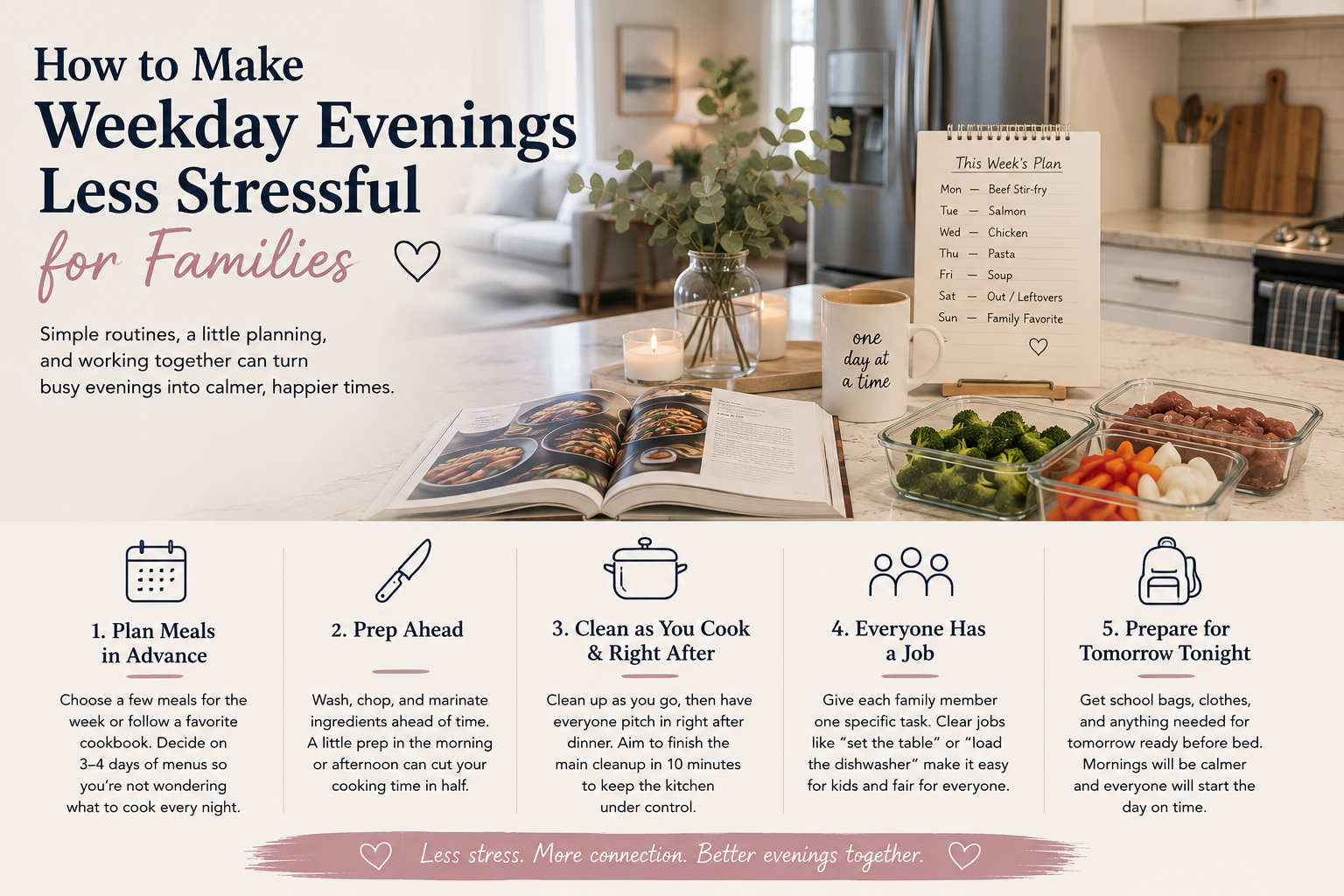
One way to make this easier is to decide several dinners ahead of time.
On the weekend, choose meals for the next three or four days. You don’t need to plan an entire week if that feels overwhelming.
Another option is to create simple themes for different days.
For example:
Monday: Korean beef or another beef dish
Tuesday: Fish
Wednesday: Chicken
Thursday: Pasta, soup, or something simple
The exact foods don’t matter. The point is that you’ve already narrowed down the decision.
There’s another method I like too: choose one cookbook you enjoy and simply work your way through it.
Instead of searching online through hundreds of recipes and trying to decide which one looks best, pick the next recipe in the book.
Sometimes having fewer choices makes life much easier.
Do the Small Prep Before the Evening Rush
Starting dinner at 5:30 or 6:00 p.m. with completely untouched ingredients makes cooking feel much harder.
You still have to wash everything, peel it, chop it, season it, and then finally start cooking.
Whenever possible, I try to do some of those little jobs earlier.
It doesn’t have to be a full meal-prep session.
Chop onions.
Wash vegetables.
Prepare green onions or garlic.
Put ingredients into containers.
Marinate meat.
These are small jobs that can be done in the morning, during a quiet moment in the afternoon, or even the night before.
Then when dinner time comes, you’re not starting from zero.
Sometimes all that’s left is putting everything into a pan, pot, oven, or slow cooker.
That difference may only save twenty or thirty minutes, but during a busy weekday evening, those minutes can feel incredibly valuable.
Clean While You Cook
This is one of the habits that makes the biggest difference for me.
If soup is simmering or something is cooking in the oven, I try not to leave every dirty item sitting on the counter.
Wash the cutting board.
Rinse the knife.
Put away ingredients you’re finished using.
Wash the large mixing bowl.
By the time dinner is ready, much of the cooking mess is already gone.
Otherwise, you finish eating a satisfying dinner, sit down for a moment—and suddenly the motivation to clean the kitchen disappears. 
That’s when a small mess can start to feel like a huge job.
Make the First 10 Minutes After Dinner Count
After dinner, I like the idea of everyone helping immediately rather than leaving everything until later.
Each person can bring their own plate and cup to the sink or dishwasher.
Then try to finish the basic cleanup within about ten minutes.
It doesn’t need to be perfect.
The kitchen doesn’t need to look like nobody cooked there.
The goal is simply to take care of the important things before everyone disappears into different rooms.
There is also something nice about everyone cleaning together.
One person loads the dishwasher.
Another clears the table.
Someone wipes the table or floor.
A job that feels annoying when one person does everything can feel much lighter when the whole family participates.
Don’t Say “Help Me”—Give One Specific Job
I’ve learned that saying:
“Can you help me?”
doesn’t always work very well with children.
They may genuinely want to help but have no idea what they’re supposed to do.
A specific request works much better.
“Can you set the table?”
“Please put everyone’s water cups out.”
“Bring your plate to the sink when you’re finished.”
“Can you put these napkins on the table?”
One clear task is easy to understand and easy to finish.
Younger children can do simple jobs, while older children can gradually take on more responsibility.
The same idea works for adults.
Instead of one person silently doing everything, it helps when responsibilities become predictable.
Maybe one parent cooks while the other clears the table and wipes the floor afterward.
It doesn’t have to be exactly equal every night.
It just shouldn’t feel like one person has to notice and manage absolutely everything.
Prepare Tomorrow Tonight
Some of the worst morning stress actually begins the night before.
A missing homework paper.
A sports uniform that isn’t ready.
A backpack that hasn’t been packed.
Someone trying to decide what to wear five minutes before leaving.
So I try to move as many morning decisions as possible into the evening.
Before bed, children can check their backpacks and school materials.
Clothes can be chosen.
Sports equipment or instruments can be placed near the door.
Anything unusual needed for school the next day can be prepared in advance.
Another helpful habit is giving everyday items a permanent home.
When children walk into the house, backpacks should go to the same place.
Shoes should have a place.
Jackets should have a place.
Sports bags and instruments should have a place.
It sounds almost too simple, but knowing where things belong prevents a surprising amount of morning chaos.
Let Go of the Perfect Evening
I think perfectionism can sometimes make family evenings more stressful than they need to be.
Dinner doesn’t always need several side dishes.
The kitchen doesn’t have to be spotless before anyone goes to bed.
Every backpack doesn’t have to look perfectly organized.
And parents don’t have to do everything themselves just because we might be able to do it faster.
Sometimes “good enough” really is good enough.
The purpose of these routines isn’t to create a perfectly organized home.
It’s to make the evening easier for everyone living in it.
Small Systems Can Change the Whole Evening
None of these ideas is particularly complicated.
Plan a few meals.
Prepare some ingredients early.
Clean while dinner cooks.
Give everyone one specific job.
Get tomorrow’s things ready before bed.
But together, these small habits remove many of the decisions and little emergencies that make weekday evenings feel so exhausting.
And when the practical things become easier, there is more room for the things we actually want from our evenings:
Eating together.
Talking about the day.
Helping with homework.
Laughing about something silly.
Or simply having a little time to relax before tomorrow begins.
A peaceful evening doesn’t come from doing everything perfectly. It comes from making fewer decisions and sharing small responsibilities as a family.