
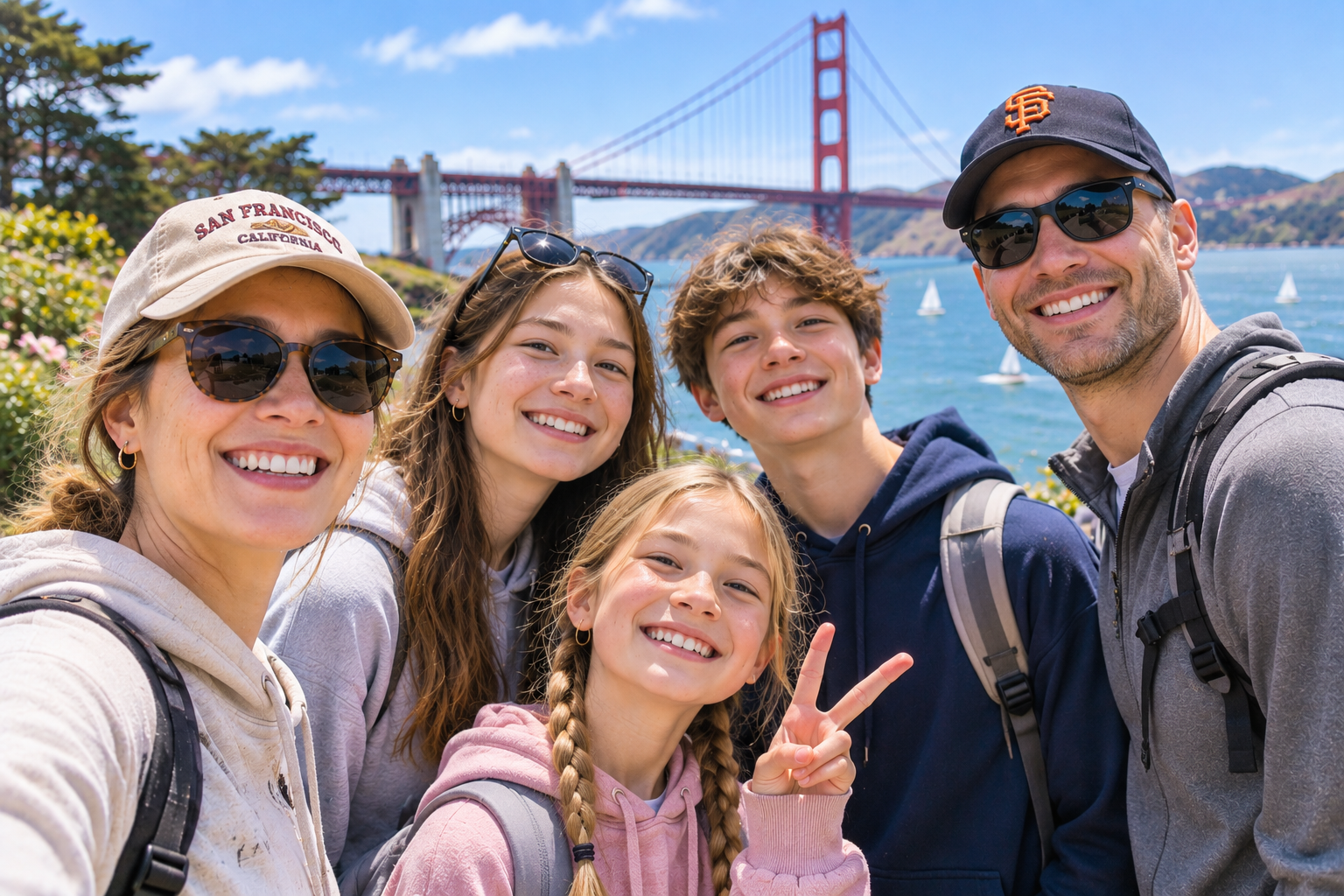
“Mom, what’s the plan for today? Are we going to another museum? If so, I think I’ll just stay at the hotel.”
“Dad, I’m not really interested in this restaurant. Can’t we just go to a burger place nearby?”
If you’ve ever traveled with tweens or teenagers, these conversations probably sound familiar.
When children are little, family vacations can feel like a collection of sweet, picture-perfect moments. But as those little children grow into young people with strong opinions and individual interests, family travel begins to change.
Sometimes, it feels less like a relaxing vacation and more like a series of negotiations.
Even when parents carefully plan activities they think their children will enjoy, visiting similar attractions over and over can eventually become boring. A vacation that was supposed to help everyone relax can start to feel like another assignment.
As a mom of three children, ages 10, 12, and 13, I’ve learned a few things from traveling as a family of five.
The biggest lesson?
Traveling with tweens and teens becomes much more enjoyable when we stop planning everything for them and start planning with them.
Here are five practical ways we’ve learned to make family vacations more enjoyable for everyone.
Table of Contents
1. Give Everyone a Share of the Vacation
One of the easiest ways for older children to lose interest in a family vacation is to spend the entire trip following someone else’s schedule.
When children become passive participants, they may start looking at their phones, asking when it’s time to leave, or simply counting the hours until they can return to the hotel.
Instead, I like the idea of giving everyone a share of the vacation.
Before our trip, we decide which areas we want to visit. Then, within those areas, each child gets a chance to choose something they want to do or somewhere they want to eat.
For a four-day trip, it might look something like this:
- Our oldest daughter chooses an activity for half a day.
- Our middle child chooses another activity.
- Our youngest daughter gets her own turn.
During each person’s chosen activity, the rest of the family agrees to participate with a positive attitude.
Of course, the choices still need to fit our budget, location, and overall schedule. But within those limits, the children have real ownership.
Their choices might include a cute café they discovered online, a character-themed shop, a sports store, or a local dessert spot.
What I’ve noticed is that children’s attitudes can change when they’re the ones making the decisions.
They’re no longer simply following the family itinerary. They’re contributing to it.
And when the rest of the family genuinely enjoys something they picked, there’s a little sense of pride that comes with it.
Giving children a voice in the itinerary can turn a family vacation into something everyone feels part of.
According to the American Academy of Pediatrics, a growing need for privacy and independence is a normal part of adolescence. Understanding these changes can help parents plan family vacations that respect their children’s individual needs.

2. Make Room for Personal Space at the Hotel
When our children were younger, sharing a hotel room and squeezing together on a bed felt cozy and fun.
As they get older, however, personal space becomes more important.
For a family of five, hotel arrangements can already be challenging. One room may feel crowded, while booking two rooms can become expensive.
Connecting rooms or suites with a separate living area can be helpful when they fit our budget.
But personal space isn’t only about the size of the hotel room.
Sometimes, it’s about giving everyone a little time to themselves.
A few small things can make hotel stays more comfortable:
- Having enough charging cables and outlets for everyone.
- Making sure the children can connect to the hotel’s Wi-Fi.
- Giving everyone a place to keep their belongings.
- Allowing some quiet downtime after a busy day.
After spending an entire day together, older children may want to watch a favorite show, listen to music, or simply relax without having to participate in another family activity.
I don’t think every moment of a family vacation needs to be spent doing something together.
Within reasonable screen-time and bedtime boundaries, allowing children to unwind in their own way can make the next day more enjoyable for everyone.
Sometimes, a little time apart helps us enjoy our time together even more.
If you’re also wondering how to choose the right accommodations for a family of five, I’ve shared more practical tips in my family of 5 travel guide.
3. Not Every Meal Needs to Be a Famous Restaurant
Parents often look forward to trying local restaurants, regional specialties, or popular places they’ve read about before a trip.
Teenagers, on the other hand, might be perfectly happy with a hamburger, pizza, or their favorite familiar food.
It can be frustrating to wait a long time for a table at a highly recommended restaurant, only to discover that your children aren’t interested in anything on the menu.
I’ve learned that not every meal needs to be a special dining experience.
Sometimes, a trip to a grocery store can be just as enjoyable.
When traveling in the United States, stores like Trader Joe’s or Target can be convenient places to pick up snacks, drinks, and easy meals.
Depending on the location and what the store carries, we might discover something different from what we usually buy at home.
Each child can choose something they want, and we can enjoy a relaxed meal back at the hotel.
If our accommodation has a kitchenette, we might pick up pizza or other simple foods to prepare. Otherwise, ready-to-eat sandwiches, salads, fruit, and snacks work just as well.
There’s something surprisingly enjoyable about gathering in a hotel room, sharing snacks, and talking about the day without worrying about restaurant reservations or waiting for food.
Does this mean we should skip local restaurants altogether?
Not at all.
We still enjoy trying new foods when everyone is up for it. But balancing special restaurant meals with simpler, more familiar options can take some pressure off the trip.
A memorable family meal doesn’t always need to happen at a famous restaurant.
Sometimes, the best memories come from the simplest moments.
4. Let Travel Time Be Downtime
Long car rides, flights, and train journeys can be some of the most challenging parts of traveling with older children.
When everyone is tired, hungry, or sitting too close together for too long, even a small disagreement between siblings can become a big argument.
I’ve learned that travel time doesn’t always need to be family bonding time.
Parents may want everyone to look out the window, admire the scenery, or have meaningful conversations.
But sometimes, children simply want to listen to music, watch something, or enjoy a little peace and quiet.
Before a longer trip, it helps to prepare a few things:
- Headphones, preferably with noise cancellation.
- Portable chargers.
- Downloaded movies, shows, or audiobooks.
- Favorite snacks and drinks.
Giving children the freedom to enjoy their own activities during part of the journey can help reduce tension.
Then, when we stop at a scenic viewpoint or take a break for refreshments, we have an opportunity to reconnect.
We can stretch our legs, enjoy the view, grab a drink, and talk for a few minutes.
These short, natural moments of conversation often feel more enjoyable than trying to keep everyone engaged throughout an entire car ride.
The goal isn’t to avoid spending time together.
It’s to recognize that everyone needs a little breathing room, especially during a long journey.
5. Let Go of the Perfect Family Photo
When children are little, taking vacation photos is usually easy.
“Stand here!”
“Smile!”
And within a few seconds, we have another family picture.
As children enter their tween and teenage years, things can become a little more complicated.
They might cover their faces, refuse to pose, or complain that they don’t like the picture.
Instead of insisting on the traditional family photo in front of every landmark, I’ve learned to appreciate different kinds of vacation pictures.
Sometimes, children prefer a candid photo, a picture taken from behind, or a more creative angle.
They might want to take a short video, capture a particular aesthetic, or photograph something that we wouldn’t have noticed ourselves.
Why not join them?
Let them choose the location, the angle, or the style of the picture.
We might even discover a new way to capture our family memories.
And if a child doesn’t want to be photographed at a particular moment, respecting that choice can go a long way.
The purpose of vacation photos is to remember the experience, not to create another source of stress.
One or two pictures that everyone genuinely loves can mean more than dozens of perfectly posed photographs.
The Real Secret to Traveling With Tweens and Teens
Traveling with tweens and teens isn’t necessarily harder than traveling with younger children.
It’s just different.
Our children are growing into individuals with their own personalities, interests, and preferences.
As parents, we sometimes need to let go of the vacation we imagined and make room for the vacation our family can actually enjoy together.
I like to think of it as letting go of 30 percent of our expectations and giving some of that space back to our children.
More choices.
More personal time.
More opportunities to be heard.
This doesn’t mean children get to decide everything. Parents still need to set boundaries, manage the budget, and make sure everyone stays safe.
But we can respect our children’s growing independence while still creating meaningful family experiences.
At the end of the day, I don’t need every activity to go according to plan.
I don’t need everyone to love every restaurant or smile in every picture.
What I really hope for is that, on our way home, my children will say:
“That was actually really fun. When can we go on another trip?”
And to me, that’s what makes a family vacation successful.