
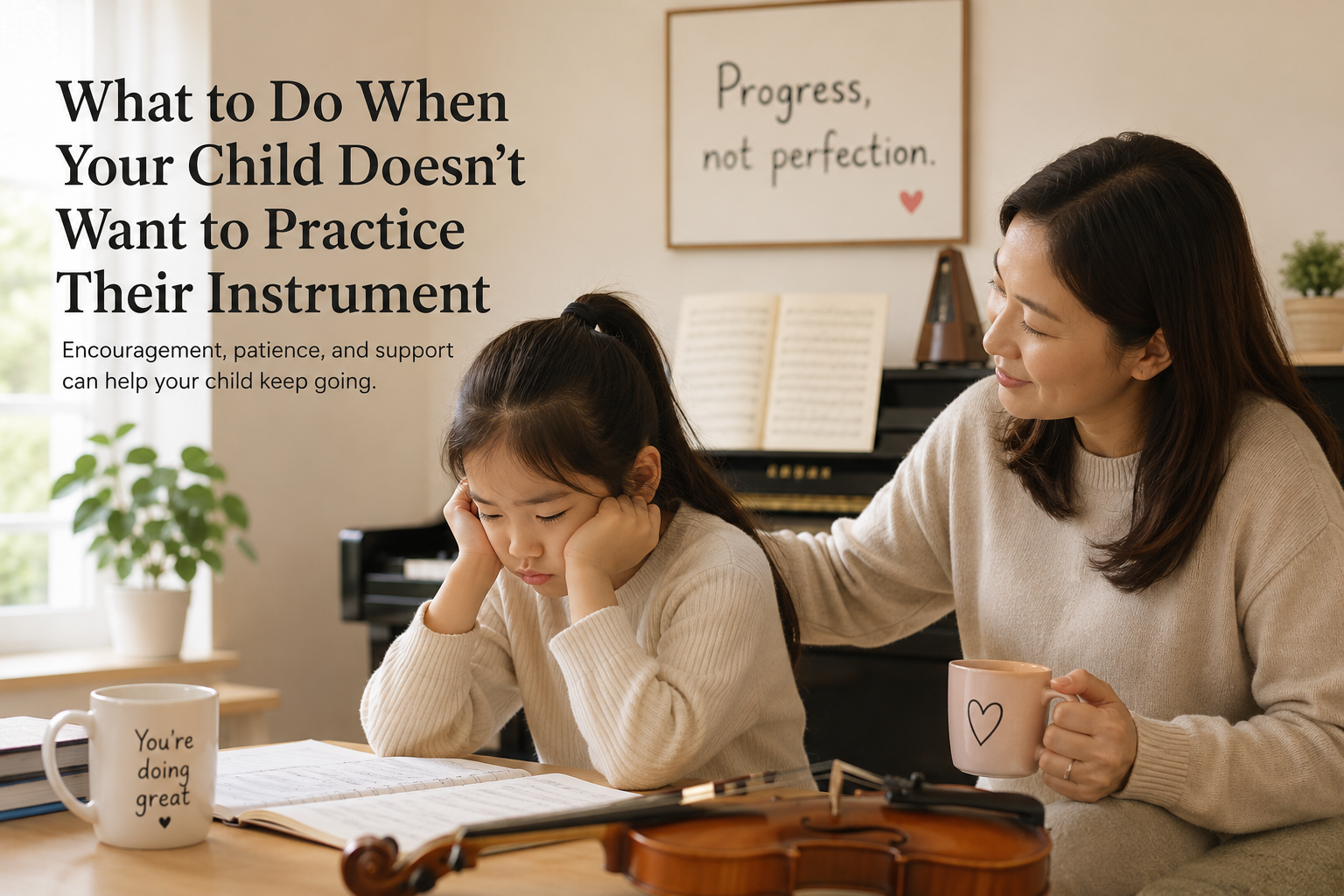
Learning an instrument can bring so many wonderful things into a child’s life.
But there is one part that almost every family eventually struggles with:
Practice.
There are days when children happily pick up their instrument on their own. And then there are days when even ten minutes of practice feels like a battle.
As a parent, I’ve come to believe that constantly pushing a child through frustration is not always the answer.
A child who practices only because of pressure will have a hard time competing with a child who genuinely enjoys making music.
But that doesn’t mean we should let our children quit every time practicing becomes difficult.
Sometimes, they simply need a little time.
Not Wanting to Practice Doesn’t Always Mean They Want to Quit
There is an important difference between:
“I don’t want to practice today.”
and
“I don’t want to play this instrument anymore.”
Children can enjoy their instrument and still dislike practicing sometimes.
This becomes especially complicated after they have already invested several years in their instrument.
They may have improved significantly, performed in recitals, participated in competitions, or received recognition for their playing.
At that point, two feelings can exist at the same time.
Part of them may want to stop.
Another part may not want to let go of everything they have worked so hard to achieve.
When those feelings collide, frustration often comes out as:
“I hate practicing.”
“I don’t want to do this anymore.”
or simply,
“I quit.”
Before treating those words as a final decision, sometimes it helps to give children a little space.
Sometimes Children Need a Break, Not a Lecture
When emotions are already high, another reminder to practice usually doesn’t help.
Sometimes the best thing we can do is simply give them time to cool down.
Take a day off.
Go out for something delicious.
Watch a funny movie together.
Do something completely unrelated to music.
A short break doesn’t erase months or years of progress.
In fact, stepping away for a little while may give children the space they need to understand what they are actually feeling.
Once the frustration has settled, the conversation can be very different.
Be Honest: Learning an Instrument Is Hard
I also don’t think we need to convince children that practicing should always be fun.
Because that’s simply not true.
Learning an instrument is hard.
Sports are hard.
Learning any skill at a high level requires repetition, patience, frustration, and sometimes doing something even when we don’t particularly feel like doing it.
Children need encouragement, but they also need the truth.
Instead of saying,
“Why are you complaining? Just practice.”
we can acknowledge what they are feeling:
“I know it’s hard. You’re working on something difficult, and it’s okay to feel frustrated.”
And then remind them:
“Something being difficult doesn’t necessarily mean you don’t like it.”
Sometimes children just need someone to recognize that what they are doing really is hard.
The Willingness to Practice Is Part of Talent
We often think of musical talent as having a good ear, beautiful tone, natural rhythm, or quick fingers.
But over the years, I have started to think about talent differently.
The willingness to practice is also part of talent.
A naturally gifted child who rarely practices may eventually be passed by a child who consistently works.
The good news is that this kind of talent can grow.
Children can learn discipline.
They can learn how to practice even when they don’t feel motivated.
They can learn how to work through frustration and come back the next day.
Those abilities may ultimately matter just as much as natural musical ability.
Don’t Turn Every Practice Session Into a Battle
Parents naturally want their children to succeed.
When we know what they are capable of, it can be frustrating to watch them avoid practicing.
But if every practice session becomes an argument between parent and child, something important can get lost.
The instrument itself begins to become associated with stress.
Instead of:
instrument = music
it can slowly become:
instrument = Mom or Dad being upset with me.
That’s not the relationship with music we want our children to develop.
There will certainly be times when parents need to remind, encourage, and even push a little.
But there should also be times when we know when to stop.
Our Goal May Be Bigger Than Winning
Recitals, auditions, competitions, and awards can be wonderful goals.
They give children something concrete to work toward and can build confidence.
But they don’t have to be the final purpose of learning an instrument.
One of the greatest things parents can give children by helping them continue music or sports may be something they won’t fully appreciate until much later.
A lifelong hobby.
Someday they may be adults with jobs, families, responsibilities, and stressful days.
Maybe they will sit down at a piano.
Pick up their violin.
Play their flute.
Go swimming.
Play tennis.
Or return to another activity they learned when they were young.
These things can make life richer.
And perhaps one day they will be grateful that someone helped them keep going during the years when they weren’t always sure they wanted to.
Sometimes Supporting Means Pushing, and Sometimes It Means Waiting
Helping a child persevere doesn’t mean pushing harder every time they struggle.
Sometimes they need encouragement.
Sometimes they need discipline.
Sometimes they need an honest reminder that worthwhile things are difficult.
And sometimes they just need a little time, a favorite meal, a good movie, and someone who understands that they are tired.
The difficult part of parenting is knowing which one they need at that particular moment.
We don’t have to make every practice session perfect.
We are trying to help our children develop a relationship with music that can last far beyond childhood.
And sometimes, helping them pause for a moment is part of helping them continue.