
Secondhand shopping in America was one of the things that felt both new and a little unfamiliar to me when I first started living here.
What surprised me most was that it didn’t always seem to be simply about saving money.
Over time, I began to see secondhand shopping differently. It could be a way of appreciating someone else’s taste, giving a well-made object another life, reducing waste, and slowly creating a home that feels more personal.
At first, though, bringing home something that had already belonged to someone else felt a little strange to me.
After all, who doesn’t enjoy the feeling of buying something brand new? There is something exciting about opening a fresh box, peeling away the packaging, and knowing that you are the first person to use it.
I used to enjoy that feeling too.
But as I began trying to simplify our home and think more carefully about what was actually worth spending money on, my attention slowly shifted.
Instead of always looking for something newly made, I started noticing things that were already here—objects that had survived years of ordinary life and somehow developed a character of their own.
Even some of the most ordinary things in my kitchen remind me of this.
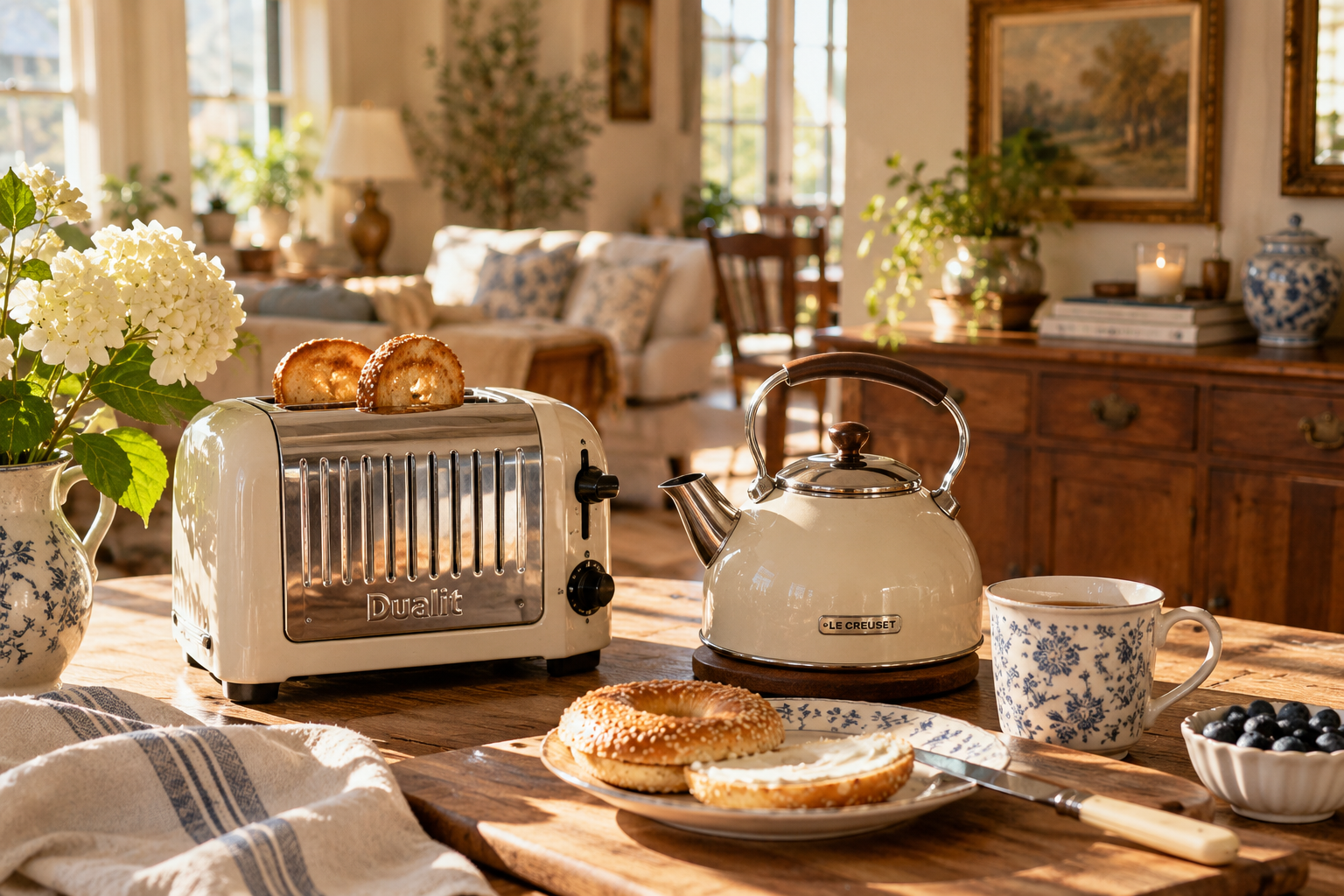
The toaster that toasted my bagel this morning and the kettle that gave me a few quiet minutes with a warm cup of tea are both secondhand items I bought more than a decade ago.
They are still here.
Still useful.
Still quietly doing their jobs.
And somehow, I appreciate them even more because of that.
Table of Contents
Estate Sales Feel Like Small Treasure Hunts
One of the things I enjoy about secondhand shopping is that you never quite know what you will find.

I like wandering through small antique shops and occasionally visiting estate sales in the neighborhood. Online, I can easily lose track of time browsing through pages of secondhand items.
It feels very different from regular online shopping.
With ordinary shopping, I can find something, put it in my cart, click a button, and have it delivered to my door a few days later.
Secondhand shopping usually asks for more patience.
I look at the condition.
I wonder how carefully the previous owner used it.
I think about whether it will actually work with the things we already have at home.
Then I look again.
And think again.
Sometimes I wait.
Sometimes someone else buys it before I make up my mind.
But that waiting has become part of the experience for me. It slows down the act of buying and gives me time to decide whether I truly want something or simply liked it for a moment.
Some Things Become More Beautiful With Time
Not long ago, I finally found a few pieces I had wanted for a long time—an original antique wooden piece and a beautifully made secondhand luxury item with a classic design.
I still remember how excited I was.
There is something about solid wood that has survived decades. The grain, weight, small marks, and changes in color tell you that the piece has already lived a life before arriving in your home.
A brand-new piece can certainly be beautiful.
But an old, well-made piece can have a kind of depth that is difficult to reproduce.
I feel something similar about classic accessories.
A beautifully made watch or bag that has already lasted for years can still look elegant because it was designed and constructed to endure.
And when I find something like that, I often feel an even stronger desire to take care of it.
Not simply because I bought it, but because it existed long before it became mine.
The Secondhand Ring I Couldn’t Buy
Of course, there are also moments when the history of an object feels heavier.
Once, I found a secondhand ring that I thought was beautiful.
I was seriously considering buying it until I read the description and learned that it had belonged to someone who had passed away.
I couldn’t buy it.
There was nothing wrong with the ring, and there was nothing wrong with the family choosing to sell it. But something about it stayed with me.
At some point, that ring may have meant something to someone.
Perhaps it marked a special occasion. Perhaps it was worn for years. Perhaps it simply sat quietly in a jewelry box.
I will never know.
And I don’t know the circumstances of the family who decided to let it go.
But seeing that ring made me think about how objects sometimes carry pieces of lives we will never know.
Even now, when I come across an older object, I sometimes wonder where it has been and who once cared for it.
That thought has made secondhand shopping feel less like simply buying used things and more like recognizing that everything has a history.
What Secondhand Shopping in America Taught Me About Value
One thing thrifting has taught me in America is that the value of an object isn’t determined only by whether it is new.
Some inexpensive things serve us perfectly well, and not every old object is automatically valuable.
But I have developed a deeper appreciation for things that were made carefully enough to last.
When an object has already survived ten, twenty, or even more years and is still beautiful and useful, that tells me something about how it was made.
Instead of constantly replacing things, I like the idea of finding something good that already exists, cleaning it, caring for it, and giving it a place in our home.
There is also something deeply personal about it.
When we stop buying everything according to the latest trend, our homes slowly begin to look less like everyone else’s.
They begin to tell our own story.
A Different Kind of Value
Of course, finding a beautiful secondhand item for much less than its original price feels good.
I won’t pretend that doesn’t matter.
But surprisingly, saving money is no longer the part I enjoy most.
The deeper satisfaction comes from recognizing something that has already stood the test of time and choosing to bring it into my own life.
It means one less perfectly good object being discarded.
Reusing what already exists can also be a simple way to reduce waste and give useful things a longer life.
It means consuming a little more slowly.
And for me, it has also become a way of discovering what I genuinely like rather than simply buying what happens to be new.
Living in America and being surrounded by a culture where secondhand shopping, antique stores, thrift shops, and estate sales are easy to explore has changed the way I think about possessions.
I’m glad it did.
Finding Beauty in What Is Already Here
Today, there are wooden pieces in our home that may once have sat in someone else’s living room, catching the same afternoon sunlight they now catch in mine.
There are older, beautifully made things that sometimes come with me when I leave the house.
And there are ordinary secondhand things—like my toaster and kettle—that have quietly become part of our family’s everyday life.
I no longer feel that everything has to be new for our home, or my life, to feel complete.
I’ve also found that keeping our home simple and uncluttered helps me appreciate the things we already own.
In the space left behind by that idea, I’ve found something warmer: an appreciation for things with history, craftsmanship, and a little evidence of time.
If you’re tired of constantly buying more things, maybe spend a weekend looking at what already exists.
Walk through a small antique shop.
Visit an estate sale.
Look slowly instead of buying quickly.
You may not find anything at all.
But every once in a while, you may come across something that has already lived a long life—and realize that its story doesn’t have to end there.
The quiet warmth that new things cannot always give may be exactly what makes your space feel a little more like home.